SongMirror

Ahnaf An Nafee / July 11, 2026
python
typescript
react
docker
tailwindcss
rest-api
A self-hosted, always-on playlist mirror for Spotify, TIDAL, Qobuz, Deezer, Amazon Music, Apple Music, and YouTube Music, with a browser app, one-off transfers, and a Jellyfin-ready local archive. A free, open-source Soundiiz alternative you run yourself.

Overview
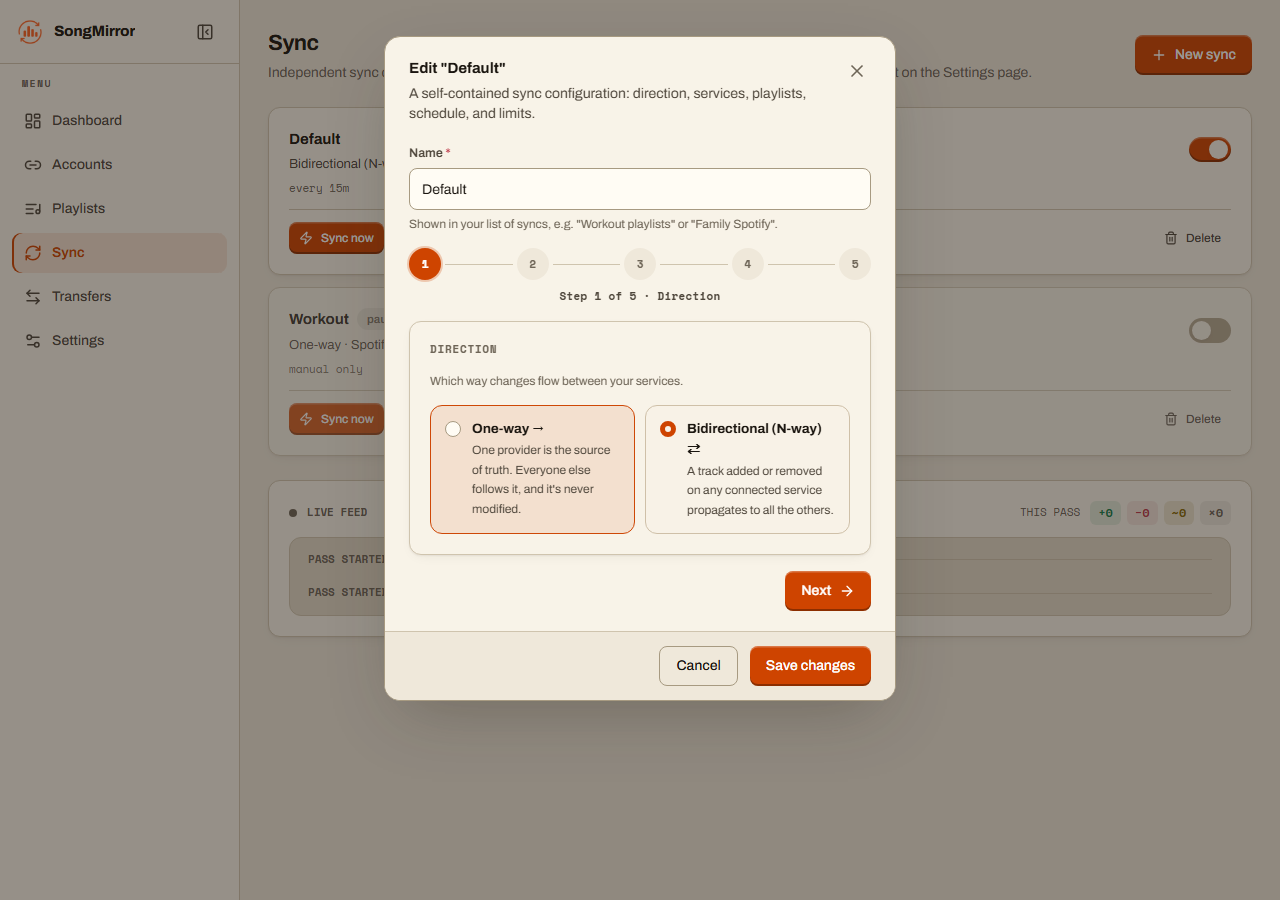
SongMirror keeps the playlists you curate on one service mirrored across all the others. Spotify, TIDAL, Qobuz, Deezer, Amazon Music, Apple Music, YouTube Music, and a local, Jellyfin-ready download folder stay identical without manual re-adding, one-by-one copying, or a paid cloud service holding your library. It can run one-way with a chosen source of truth, use an authoritative group where two or more services jointly define the playlist, or reconcile every selected service in bidirectional (N-way) mode. I built it as a free, open-source alternative to Soundiiz and TuneMyMusic that you own and host yourself.
I wrote up the engineering behind it in a dedicated post: A Self-Hosted Playlist Mirror for Seven Music Services.
What I Built
It started as a headless Python engine and grew into a browser app on the same core:
- Sync engine in Python: ISRC-first matching with Unicode-aware fuzzy fallbacks (RapidFuzz plus anyascii romanization, anchored by track duration), oldest-first date-added ordering, and a paranoid removal path guarded by a dry-run default, per-pass caps, and net-loss and empty-snapshot protection.
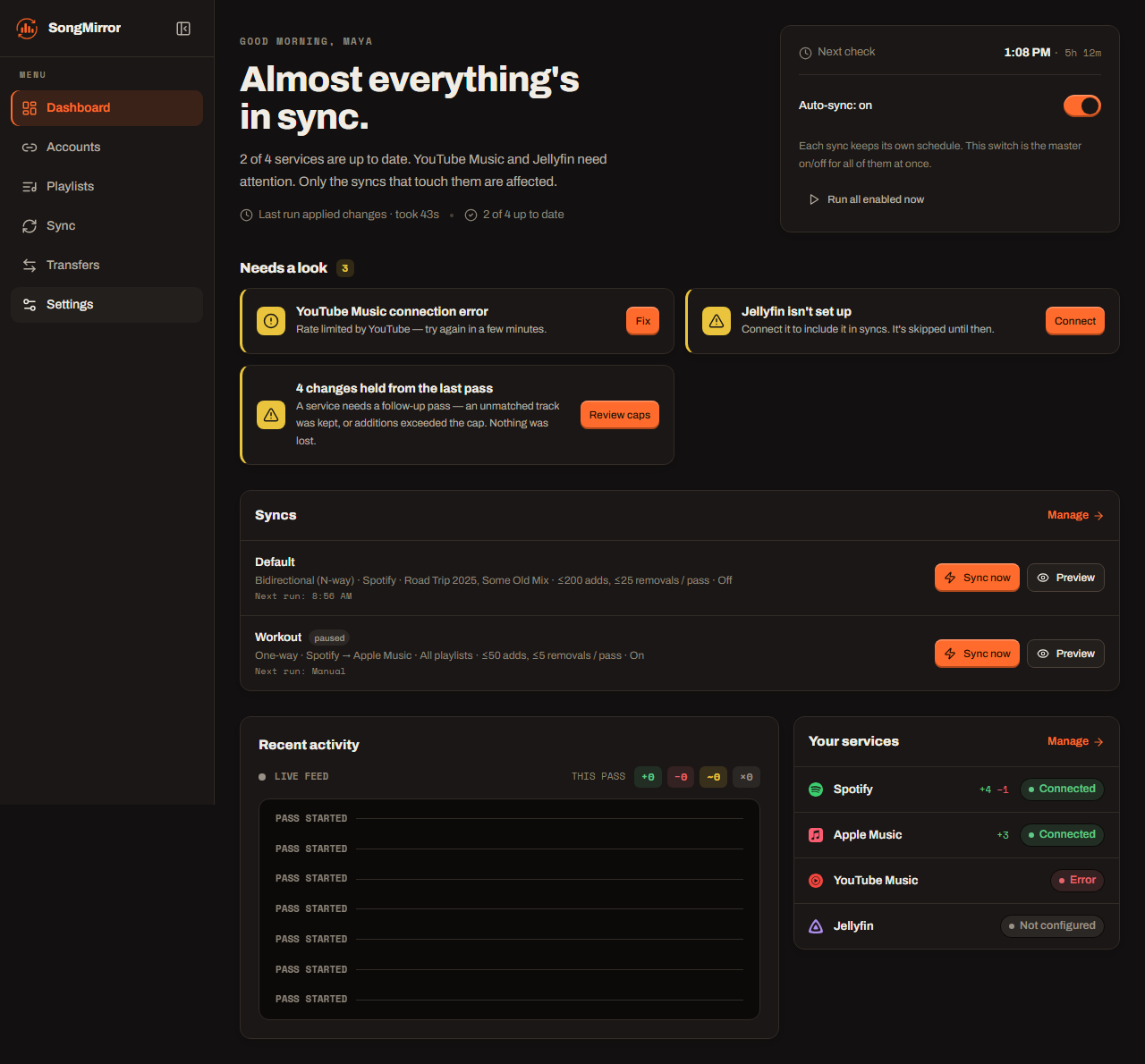
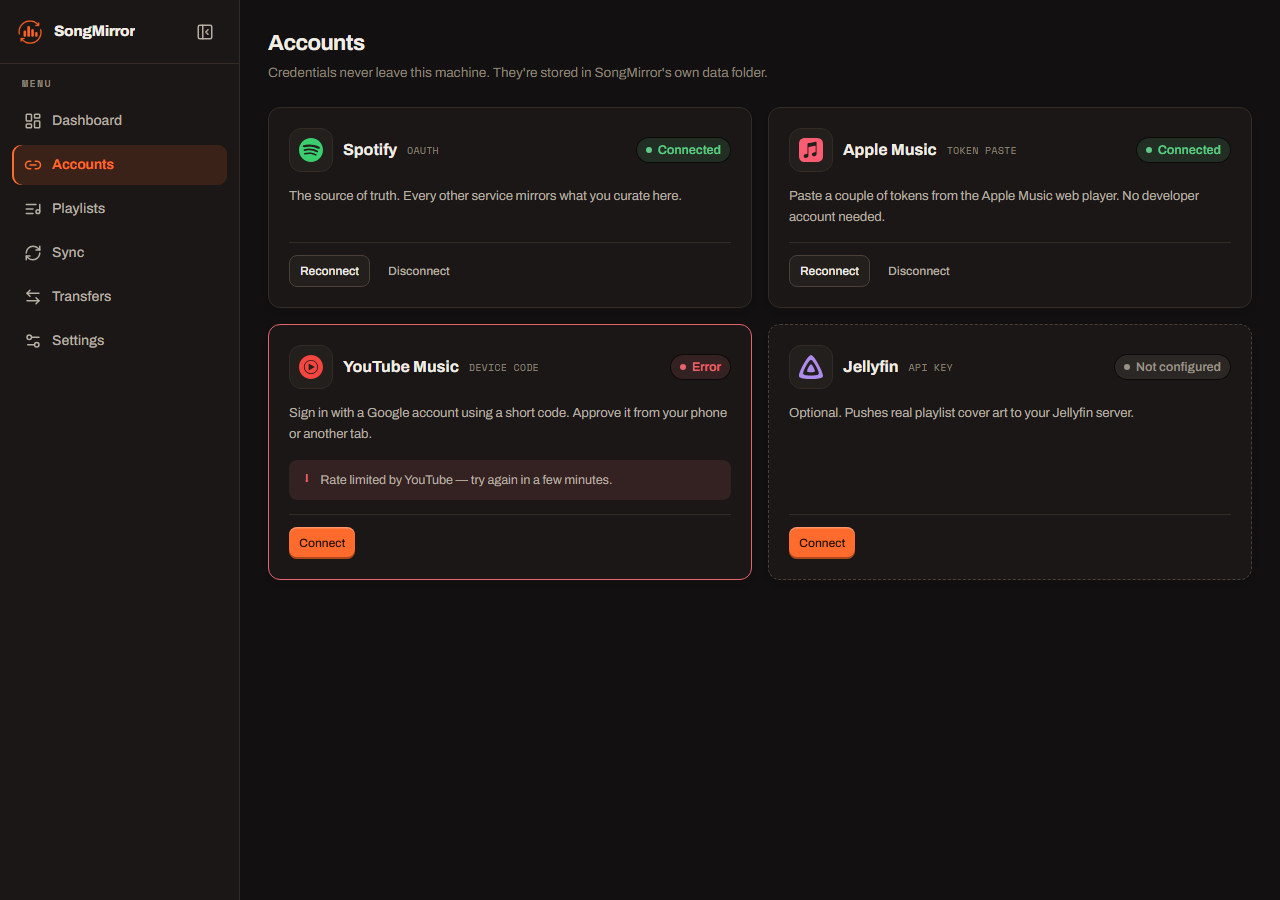
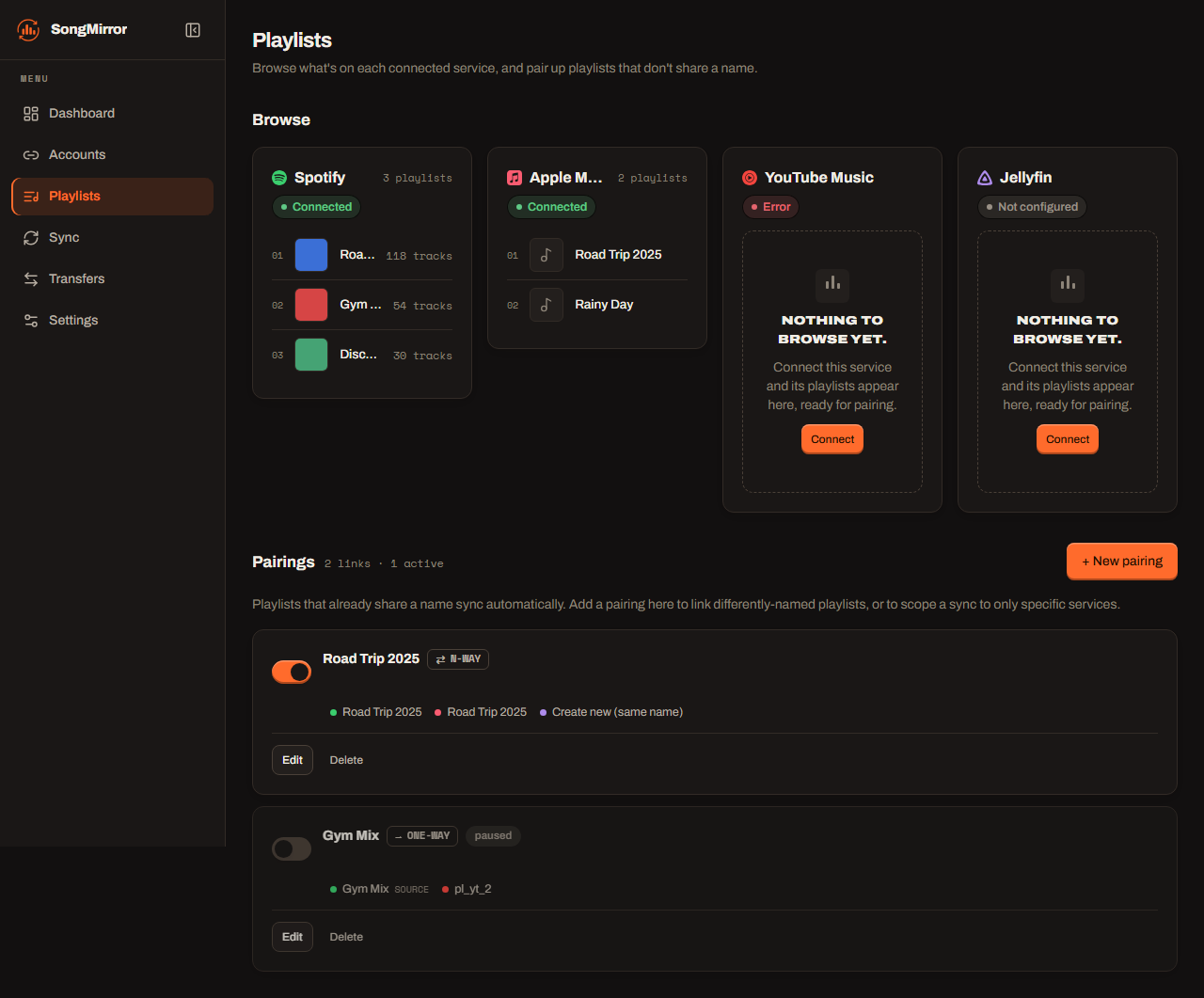
- Web app with a FastAPI backend and a React single-page UI: connect each service, build any number of named syncs, choose one-way, authoritative-group, or N-way reconciliation, run one-off transfers, and watch every match, add, and removal stream live over server-sent events. A
serviceslayer drives the engine so the web layer never touches it directly. - Seven music-service connectors behind one
MirrorTargetinterface: Spotify, TIDAL, Qobuz, Deezer, Amazon Music, Apple Music, and YouTube Music. A separate Jellyfin integration keeps a local download mirror organized and playlist-ready. - Docker deployment: one
docker compose up -dserves the UI and runs your syncs on schedule. Everything is configured in the browser and saved to a local data folder, so no credentials ever leave the machine.
Highlights
- Cross-catalog matching that survives multi-artist credit drift, remaster and "Official Music Video" suffixes, and non-Latin scripts, never guessing when nothing clears the bar.
- Authoritative groups for playlists curated across two or more services, plus bidirectional N-way sync with echo suppression via a per-provider canonical snapshot, add-wins conflict resolution, and a read-collapse guard against transient API hiccups.
- One-off transfers with pause, resume, and stop, plus manual resolution of tracks that could not be matched automatically.
- A Jellyfin-ready local audio mirror through spotDL, with per-playlist folders, real playlist covers, and an auto-updated
.m3u8.
Screenshots
The source is on GitHub, MIT-licensed, and the default run is a dry run that prints every add and removal it would make before touching a single playlist.